
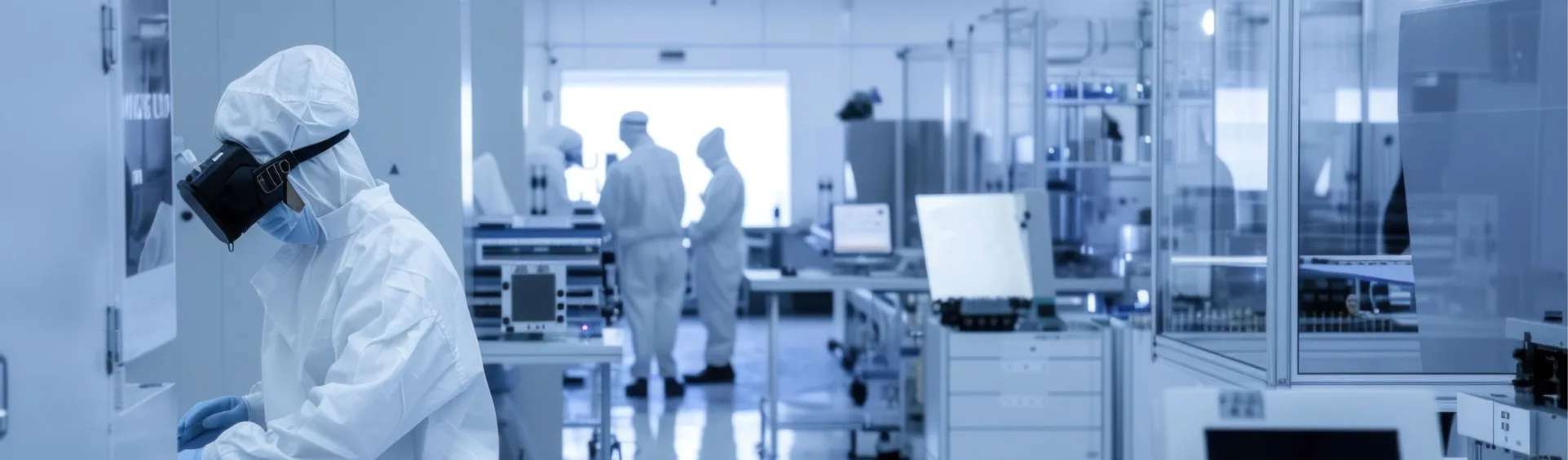
7 Essential Steps to Building a Compliant Cleanroom in KL & Selangor
Building a compliant cleanroom in KL and Selangor requires strategic planning, technical expertise, and strict adherence to regulatory standards. Each stage, from initial classification to long-term maintenance, plays a vital role in ensuring contamination control, product quality, and operational efficiency. A well-executed cleanroom project not only meets ISO and GMP requirements but also supports sustainable performance for years to come.
1. Define Cleanroom Classification Requirements
The foundation of any cleanroom project begins with determining the correct ISO classification. The required class level will dictate filtration efficiency, airflow rates, room pressure design, and overall construction standards. Selecting the wrong classification can lead to compliance issues or unnecessary costs, so this step must be carefully evaluated based on operational needs.
Key considerations include:
- Required ISO Class (e.g., ISO 5, ISO 7, ISO 8)
- Industry-specific compliance standards (GMP, medical, electronics)
- Product sensitivity to airborne particles
- Long-term operational requirements and scalability
2. Conduct Site Assessment and Feasibility Study
A thorough site assessment is crucial for building a compliant cleanroom in Selangor or KL. Evaluating structural capacity, utilities, and workflow ensures the facility can meet performance and contamination control requirements.
A proper feasibility study should review:
- Available floor space and ceiling height
- Structural strength and load-bearing capacity
- Existing HVAC, electrical, and utility systems
- Workflow layout and personnel movement planning
3. Design Airflow and Filtration Systems
Airflow design is the core of cleanroom performance. Proper engineering ensures that airborne contaminants are continuously removed while maintaining pressure differentials between rooms. A well-designed system improves stability, efficiency, and compliance.
Important design factors include:
- Required air changes per hour (ACH)
- Laminar or turbulent airflow configuration
- HEPA or ULPA filter specifications
- Positive or negative room pressure strategy
4. Select Appropriate Construction Materials
Cleanroom construction materials must be durable, easy to sanitize, and resistant to contamination buildup. Material selection affects not only cleanliness performance but also long-term maintenance costs and system longevity.
Common material considerations include:
- Non-porous wall and ceiling panel systems
- Seamless epoxy or vinyl flooring
- Corrosion-resistant aluminum or stainless steel framing
- Smooth surfaces to minimize particle accumulation
5. Install Environmental Control Systems
Maintaining stable environmental conditions is equally important as particle filtration. Temperature, humidity, and pressure levels must remain consistent to protect sensitive products and manufacturing processes.
Environmental control systems typically manage:
- Temperature regulation for product stability
- Humidity control to prevent condensation or static
- Pressure differential monitoring between zones
- Cleanroom-grade lighting systems
6. Testing, Validation, and Certification
After construction, a cleanroom facility must undergo validation and testing to ensure it meets all required standards. This confirms that airflow, filtration, and environmental systems are functioning properly.
Validation procedures typically include:
- Particle count testing
- Airflow velocity and uniformity testing
- HEPA filter integrity testing (PAO/DOP test)
- Pressure differential verification
7. Ongoing Maintenance and Monitoring
Cleanroom compliance is an ongoing commitment rather than a one-time achievement. Regular monitoring and preventive maintenance ensure the system continues operating at peak performance while maintaining certification standards.
Ongoing maintenance activities include:
- Scheduled HEPA/ULPA filter replacement
- Continuous airflow and pressure monitoring
- Equipment servicing and calibration
- Periodic re-certification and performance audits
Common Challenges in Cleanroom Projects
Building a cleanroom in KL or Selangor can present several technical and operational challenges if not properly planned. Delays, compliance gaps, or airflow imbalances can significantly impact project timelines and costs.
Common challenges include:
- Incorrect ISO class estimation
- Poor airflow balancing or pressure leakage
- Inadequate HVAC system capacity
- Delays in validation and certification
- Underestimating long-term maintenance needs
Identifying these risks early ensures smoother project execution and long-term performance stability.
Why Choose EEPS Engineering for Your Cleanroom Project
Selecting the right cleanroom contractor in Malaysia is critical to ensuring your facility meets ISO standards, regulatory requirements, and long-term operational goals. EEPS Engineering brings extensive experience in designing and building compliant cleanroom systems across KL, Selangor, and throughout Malaysia.
With a strong focus on precision, performance, and reliability, EEPS Engineering delivers turnkey cleanroom solutions tailored to each client’s industry requirements.
Key advantages of working with EEPS Engineering include:
- End-to-end project management from design to certification
- Custom cleanroom engineering solutions based on ISO and GMP standards
- High-quality filtration and environmental control systems
- Comprehensive testing and validation services
- Preventive maintenance and after-sales technical support
By partnering with EEPS Engineering, businesses can ensure their cleanroom is not only compliant but also optimized for efficiency, durability, and future scalability.
Frequently Asked Questions (FAQ)
What ISO class is required for a cleanroom in Malaysia?
The required ISO class depends on the industry and product sensitivity. Common classifications include ISO Class 5, 7, and 8, with stricter classes required for pharmaceuticals and semiconductor manufacturing.
How long does it take to build a compliant cleanroom in KL or Selangor?
The timeline depends on project size, complexity, and required classification. On average, a cleanroom project can take several weeks to a few months, including design, construction, and validation.
What is the difference between HEPA and ULPA filters in cleanrooms?
HEPA filters remove at least 99.97% of particles at 0.3 microns, while ULPA filters provide even higher filtration efficiency for environments requiring stricter contamination control.
How often should a cleanroom be tested and re-certified?
Cleanrooms should undergo regular monitoring and periodic re-certification, typically annually or based on regulatory requirements, to ensure continued compliance with ISO and industry standards.
Conclusion
Building a compliant cleanroom in KL and Selangor requires careful planning, technical precision, and strict adherence to industry standards. From defining the correct ISO classification to implementing proper airflow systems and ongoing maintenance, every step plays a crucial role in maintaining air quality and contamination control.
By following these 7 essential steps, businesses in Malaysia can ensure regulatory compliance, protect product integrity, and create a controlled environment that supports long-term operational efficiency. Partnering with an experienced cleanroom contractor further ensures smooth project execution, proper validation, and sustainable performance for years to come.
Get Your Custom Cleanroom Plan Today
Take the guesswork out of building a compliant cleanroom. Our experts in KL, Selangor, and across Malaysia provide tailored designs, filtration solutions, and ISO-compliant systems to fit your facility’s needs.
Disclaimer
We hope you find this article helpful and informative. Our content is intended for general informational purposes only and does not constitute advice or necessarily reflect the full range of services offered by EEPS Engineering Sdn. Bhd.
For tailored solutions or expert recommendations, we encourage you to consult with a qualified professional or contact our team directly. While we strive for accuracy and completeness in our blog posts, we cannot guarantee they are error-free. EEPS Engineering Sdn. Bhd. assumes no responsibility for any errors or omissions.
